

Machine Learning Development
Custom ML models built on your data — not a generic API wrapper. Trained, tested, and integrated into the tools your team already uses.


App Deft builds custom AI and machine learning solutions that eliminate the manual, repetitive, error-prone work your team has stopped complaining about — because it is just how things are done. It does not have to be.
Free 30-minute scoping call. No pitch. You leave knowing what AI can and cannot do for your specific situation.
Trusted by teams building ambitious digital products




Most businesses that come to us are not short on AI ideas. They are short on AI that works in their actual environment — integrated with the tools they already use, trained on their own data, and maintained by a team that answers the phone.
We build AI software the same way we build any product: starting with the specific problem, not the technology. We figure out what your team is doing manually that a model could learn. We build it. We connect it to your existing stack. We measure whether it actually reduces the work.
If AI is not the right solution for your problem, we will tell you that in the first call — along with what is.
Every service here connects to a specific business outcome. If you cannot see where yours fits, tell us what you are trying to fix — we will figure it out together.
Custom ML models built on your data — not a generic API wrapper. Trained, tested, and integrated into the tools your team already uses.

Systems that read contracts, classify support tickets, extract data from forms, and understand what your customers are actually asking — without a human reading every line.

Image and video analysis for quality control, document scanning, identity verification, and visual inspection at a speed no human team can match.
Conversational AI trained on your knowledge base — not a generic FAQ bot. Built to handle the 40 questions your support team answers every day.
Connect OpenAI, Google Gemini, Anthropic, and other AI APIs to your existing systems. Your CRM, your ERP, your custom platform — integrated, not replaced.
Models that tell you what is likely to happen before it does — churn risk, demand forecasting, lead scoring, and maintenance prediction built on your historical data.

AI that sits between your existing systems and does the work that currently requires a human to copy, check, approve, and forward. End-to-end automation for processes that span multiple tools.

Not sure where to start? We map your operations, identify the three highest-ROI automation opportunities, and give you a build roadmap — before any contract is signed.
The same AI infrastructure shows up differently depending on where the bottleneck is. Here is where we have applied it.

AI applications: Lead scoring models that rank inbound prospects by close probability. Content generation tools trained on your brand voice. Automated follow-up sequences triggered by buyer behaviour signals.

AI applications: Intelligent chatbots trained on your knowledge base that resolve tier-1 tickets without human intervention. Ticket classification and routing that gets complex issues to the right agent immediately.

AI applications: Intelligent document processing that extracts, validates, and routes data between systems. Workflow automation that removes the human steps between tools that cannot talk to each other.

AI applications: Medical record summarisation and data extraction. Appointment scheduling automation. Patient intake processing that populates EHR fields without manual data entry.

AI applications: Computer vision quality control systems that inspect at production speed. Predictive maintenance models that flag equipment issues before they cause downtime.

AI applications: Demand forecasting models that predict SKU-level sales with your historical data. Personalisation engines that surface the right product to the right customer at the right moment.
Most AI projects fail in production — not because the model was wrong, but because no one planned for how it would live inside a real business. Here is how we build differently.

We start by mapping the specific task AI needs to do. What data exists. What the current manual process costs in time and errors. What good output looks like. This shapes everything that follows.
We look at what data you have, what shape it is in, and whether it is enough to train a reliable model. If it is not, we tell you what to collect and how long it will take before training is worth starting.
We build and train the model on your data — not a pre-trained generic model with a thin wrapper. We test it against real edge cases before it touches production.
The model connects to your existing tools — your CRM, your ERP, your custom platform, your database. We build the API layer, the data pipeline, and the user interface your team will actually use.
Numbers without context are just numbers. Here is what ours mean.
We recommend the technology that fits the problem. These are the tools we use most — chosen because they are production-proven, not because they are trending.
 HTML
 CSS
 JavaScript
 TypeScript
 Dart
 React.js
 Vue.js
 Angular
 Next.js
 Nuxt.js
 Flutter
 Tailwind CSS
 Bootstrap
 Material UI
AI development without product delivery experience is research. We bring both.

Completed in the last 36 months — across automation, NLP, computer vision, and AI integration. Not pilots. Shipped products.

Our core ML engineers have been building models since before large language models made it easy to skip the fundamentals. That experience shows up when edge cases hit production.

AI systems connected to CRMs, ERPs, custom databases, third-party APIs, and proprietary platforms. We have seen most integration patterns — including the ones that look simple and are not.
Every AI project at App Deft follows this sequence. Each phase has a clear output you can see and approve before the next one starts.
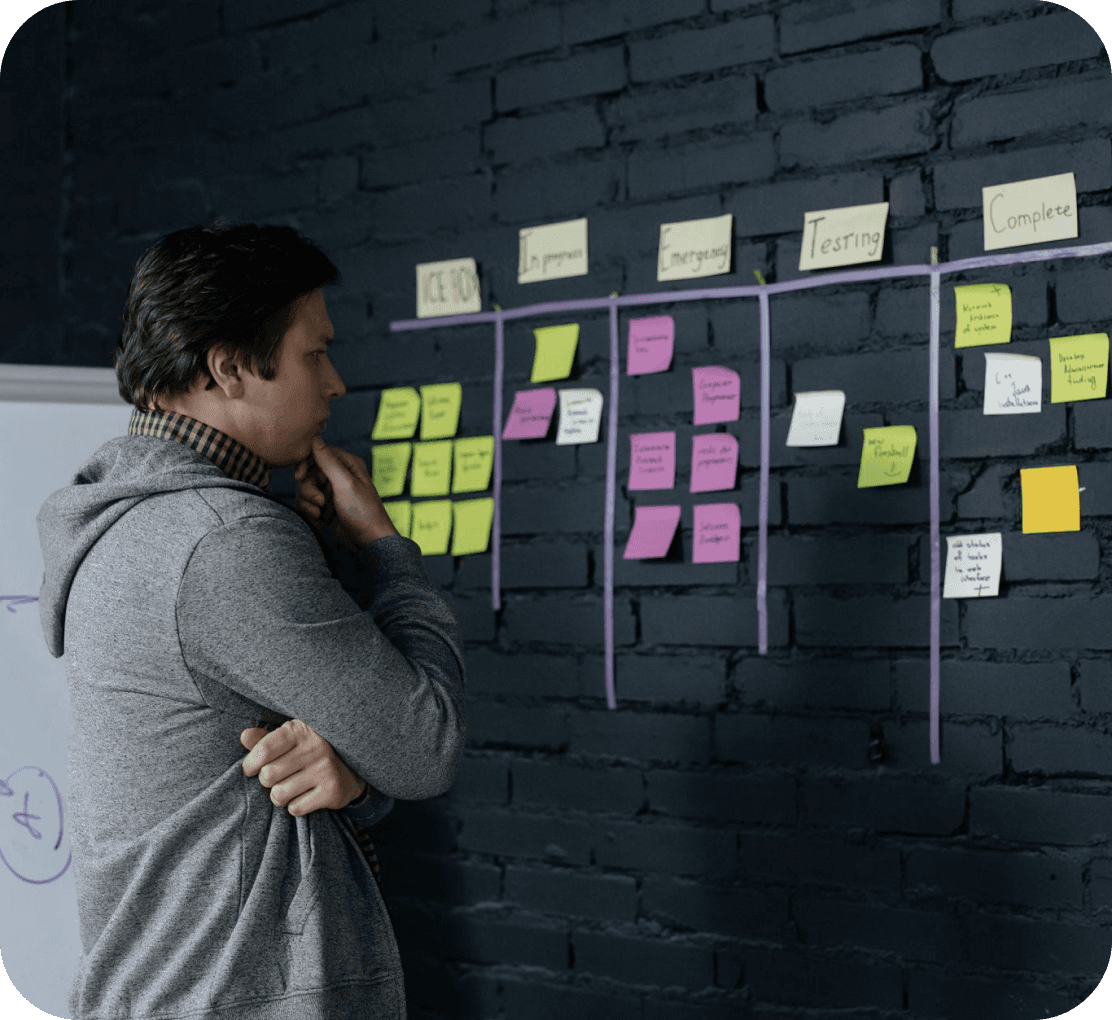
We document the specific business problem, the current manual process, the data available, and the success metric. Output: a one-page problem brief you approve before we move forward.
You don’t need a clear use case to get started. Let’s explore where AI can create the most value for your business.
Book A Free Product Scoping Call
Real feedback from clients who trusted us to bring their ideas to life.
From architecture to deployment, the execution was flawless. They didn't just write code; they challenged our assumptions and built a significantly better fintech product.


Rakesh and his team did an outstanding job, aligning perfectly with our project objectives and delivering on time. We look forward to collaborating with him on future projects!

I worked with App Deft Team for years as they maintained our WordPress site. They are very proficient as well as a good communicator. I would not hesitate to hire them for projects again. Thanks App Deft!
The engineering depth of Appdeft is top-tier. They translated our complex multi-tenant specifications into production-ready software two weeks ahead of schedule.
From architecture to deployment, the execution was flawless. They didn't just write code; they challenged our assumptions and built a significantly better fintech product.
Rakesh and his team did an outstanding job, aligning perfectly with our project objectives and delivering on time. We look forward to collaborating with him on future projects!
I worked with App Deft Team for years as they maintained our WordPress site. They are very proficient as well as a good communicator. I would not hesitate to hire them for projects again. Thanks App Deft!



Expert insights, emerging trends, and practical strategies shaping the future of business.
Find answers to common questions about our services, development process, and technology expertise.
It depends on the complexity of the problem and the state of your data. A focused automation — one process, clean data — can be in production in 4–8 weeks. A full ML platform with multiple models, integrations, and a user interface typically runs 12–20 weeks. We give you a specific estimate after one scoping call.
Describe the manual process, the data you have, or the problem you are trying to solve. We will review it and respond within one business day with a clear next step.