
Custom Web Application Development
Web-based products built for your exact user workflows — SaaS platforms, client portals, operations dashboards, and marketplace platforms. Not a template customised to look different.


App Deft takes digital products from idea to launch — custom web applications, mobile apps, IoT systems, and field operations platforms. Built for the real constraints of your market, timeline, and budget.
Free 30-minute scoping call. You leave with a rough scope, a timeline, and a cost range.
Trusted by teams building ambitious digital products




Most product ideas that never reach users do not fail because of the idea. They fail because of the build a team that over-engineered the first version, a spec that changed every week, or a launch timeline that kept moving.
App Deft has shipped 75+ digital products across 20+ countries. We have seen what causes products to stall, and we design the process to prevent it. We scope tight, build the version that validates your core assumption, and get it in front of users before the roadmap grows.
Whether you are a founder building a first product or a company launching a new business line, the process is the same: define what the first version needs to do, build it well, and launch it fast enough that the market can tell you what to build next.
Every service here is part of how we take a product from idea to production. We handle the full stack — or the specific part of it you need.
Web-based products built for your exact user workflows — SaaS platforms, client portals, operations dashboards, and marketplace platforms. Not a template customised to look different.

iOS and Android apps built in Flutter — one codebase, two platforms, faster iteration. Built for the users who will open it every day, not the demo that impresses the stakeholders.

Products architected for the cloud from the start — scalable, cost-efficient, and built to handle the traffic spike when your launch lands. AWS, GCP, and Azure infrastructure designed for your scale requirements.
The minimum version that proves your core assumption — built in 8–12 weeks, designed to generate real user feedback, not investor slides. We help you define what belongs in the MVP and what belongs in version two.

Before development starts: we map the user journey, define the feature set for the first version, identify the technical risks, and produce a specification your team can build from — or that we can build for you.

Your existing product is holding you back — outdated stack, performance problems, or a codebase no one wants to touch. We modernise legacy systems without shutting down the product your users depend on.
The product development process looks different depending on where you are. Here is what working with App Deft means for each type of client.

Problem: You have a product idea, a runway, and pressure to launch before the window closes.
What we do for you: We define the MVP scope, build the first version in 8–12 weeks, and get it to users before the roadmap expands. You validate the assumption with real data — not with another round of design reviews.

Problem: Your internal team is at capacity, and the project cannot wait for a new hire to onboard.
What we do for you: We embed as an extension of your product team — taking ownership of the build while your team stays focused on the core business. Full delivery, not augmentation.

Problem: You have a roadmap, a backlog, and not enough engineers to move at the speed the business needs.
What we do for you: We scale your delivery capacity — taking specific features, integrations, or product lines and delivering them to the same standard your in-house team holds.
These are the specific things past clients have told us they were not getting from the teams they tried before us.

Most project overruns start in the requirements phase not the development phase. We invest heavily in discovery so the specification is right before the first sprint starts.
Product strategy, UX design, development, QA, and deployment handled by one team, under one point of contact. No handoffs between agencies, no version control across vendors.
Perfect is the reason most products never launch. We help you define what the first version must do to validate the business model, and we build exactly that with a clear plan for what comes next.
Source code, documentation, infrastructure configuration, design files all transferred to you on project completion. No lock-in, no ongoing dependency on App Deft unless you choose it.
Numbers without context are just numbers. Here is what ours mean.

Every product here started as a problem statement and a deadline. Click through to see the build and the outcome
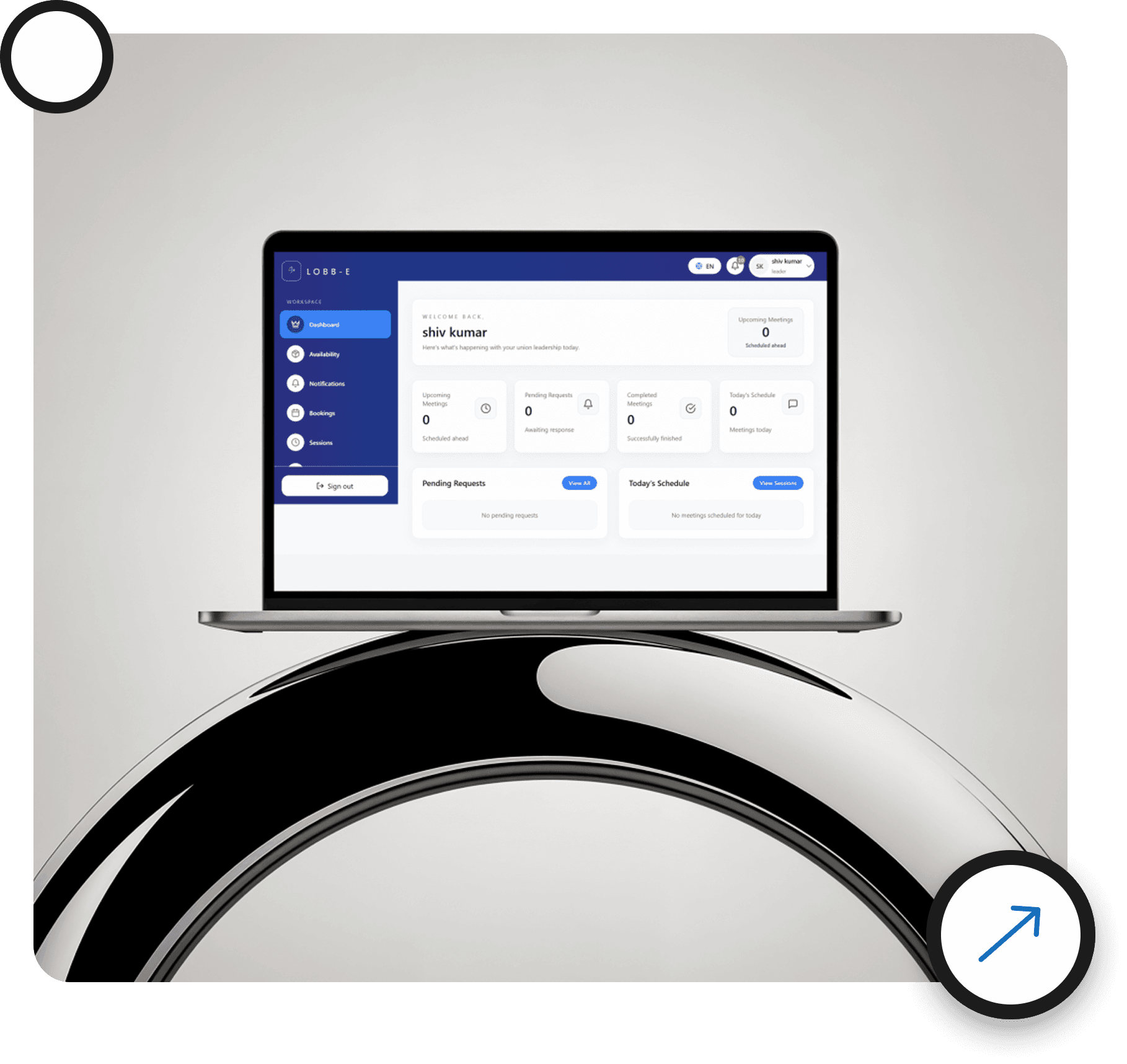
Lobb-e is an AI - powered workplace support platform that helps employees understand their labor rights through an AI legal assistant. Users can also book consultations with experienced union leaders, manage subscriptions, and keep their consultations organized in one place.
Simplified access to workplace guidance and a more streamlined consultation experience.

Building IoT products means solving two problems at once: the device problem and the software problem. We handle both — hardware integration, firmware communication, cloud data pipelines, and the user-facing dashboard that makes the data useful.

Most IoT projects stall at the integration layer — the point where the device data needs to reach the cloud and the cloud data needs to reach the user interface. We have shipped connected products across asset tracking, fleet management, industrial monitoring, and smart device categories. We know where the integration complexity lives and how to engineer around it.
MQTT, HTTP, CoAP, and BLE communication between physical devices and cloud infrastructure. We handle the protocol layer so your team focuses on the application, not the plumbing.
Scalable cloud infrastructure that handles device data at volume — AWS IoT Core, Google Cloud IoT, and Azure IoT Hub — designed for the data rates your device fleet will generate at scale, not just at launch.
Web and mobile interfaces that surface device data in a format operations teams can act on — not raw telemetry in a table. Alerts, maps, status indicators, and trend analysis built around how your team makes decisions.
We work with your hardware engineers or firmware vendors to define the communication contract between device and cloud. We do not write firmware — we define the interface that connects it to the application layer.
Device authentication, encrypted data transmission, and access control built into the architecture from the start. Security is not a feature we add at the end.
Your assets are moving. Your software should know where they are, where they have been, and where they are going — without someone manually updating a spreadsheet.

Real-time location data for every tracked asset — on a map interface your operations team can interpret at a glance, not in a raw coordinates export.

Define virtual boundaries around sites, depots, or restricted areas. Get an alert the moment an asset enters or exits — without checking the map.

Status, condition, and utilisation data for each asset — not just location. Know which assets are idle, overdue for maintenance, or outside their assigned zone.

Configurable alerts delivered by push notification, SMS, or email — triggered by location events, status changes, or threshold breaches. No one needs to watch the dashboard for something to happen.

Planned vs. actual route comparison for field teams and vehicles. Identify deviation patterns, optimise routes for the next run, and reduce fuel and time cost across the fleet.

Scheduled and on-demand reports on asset utilisation, location history, alert history, and compliance metrics — exportable in the format your management team uses.
We build custom asset tracking platforms for businesses that manage physical assets across multiple sites, vehicles, or field locations. Whether you are tracking a fleet of 50 vehicles or 10,000 equipment items across a logistics network, the platform scales to the data volume and the user base.
Your field teams are running operations on WhatsApp messages and phone calls. There is a better way to dispatch, track, and report on work that happens outside the office.

Assign jobs to field agents, set priorities, and manage scheduling conflicts from a central dashboard. Field teams receive job details on their mobile app — no phone call required.

iOS and Android apps for field agents — job details, customer information, forms, photo capture, and status updates, all without a data connection if the field location requires it.
Replace paper-based inspection reports, job completion forms, and compliance checklists with digital equivalents that submit directly to the back-office system the moment the field agent completes them.

See where your field agents are, which jobs are in progress, and which are overdue — on a live map that updates as the day moves. No check-in calls, no status update emails.

Automated customer notifications — job confirmed, agent on the way, job completed — triggered by field agent status updates. Customers stop calling the office to ask where their technician is.

Job completion rates, agent productivity, SLA compliance, and customer satisfaction data — aggregated from field activity and available in the management dashboard without a manual data collection step.
We recommend the stack that fits the product requirements — not the one we are most comfortable billing hours on.
 React
 Next.js
 Vue.js
 Flutter
 codebase
We have seen what goes wrong at every stage of a product build. The process we run today is shaped by that.

Countries where App Deft-built products are in active use. Global clients, India-based delivery, $15–25/hr billing rate.

Years building IoT and connected product systems — before connected hardware became a standard feature request.

Third-party integrations delivered — payment gateways, CRMs, ERPs, GPS providers, AI APIs, and communication platforms — connected to client products without disrupting existing operations.

Every phase has a visible output. Nothing moves to the next phase without your sign-off — so there are no surprises at the end.

We map the product goals, user journeys, technical requirements, and launch constraints. Output: a product brief, a feature list for version one, and a risk register you approve before design or development starts.
Tell us your idea and goals. We’ll define what your first version needs to succeed.
Book A Free Product Scoping Call
Real feedback from clients who trusted us to bring their ideas to life.
From architecture to deployment, the execution was flawless. They didn't just write code; they challenged our assumptions and built a significantly better fintech product.


Rakesh and his team did an outstanding job, aligning perfectly with our project objectives and delivering on time. We look forward to collaborating with him on future projects!

I worked with App Deft Team for years as they maintained our WordPress site. They are very proficient as well as a good communicator. I would not hesitate to hire them for projects again. Thanks App Deft!
The engineering depth of Appdeft is top-tier. They translated our complex multi-tenant specifications into production-ready software two weeks ahead of schedule.
From architecture to deployment, the execution was flawless. They didn't just write code; they challenged our assumptions and built a significantly better fintech product.
Rakesh and his team did an outstanding job, aligning perfectly with our project objectives and delivering on time. We look forward to collaborating with him on future projects!
I worked with App Deft Team for years as they maintained our WordPress site. They are very proficient as well as a good communicator. I would not hesitate to hire them for projects again. Thanks App Deft!



Expert insights, emerging trends, and practical strategies shaping the future of business.
A focused MVP — one core user journey, clean scope — typically runs 8–12 weeks. A full product with multiple user types, integrations, and a content management layer runs 16–24 weeks. IoT products with hardware integration add 4–8 weeks depending on device complexity. We give you a specific timeline after a scoping call — not a range wide enough to be meaningless.
Whether you have a detailed specification or an idea on a napkin, fill in what you know. We will review it and come back within one business day with a clear next step.